
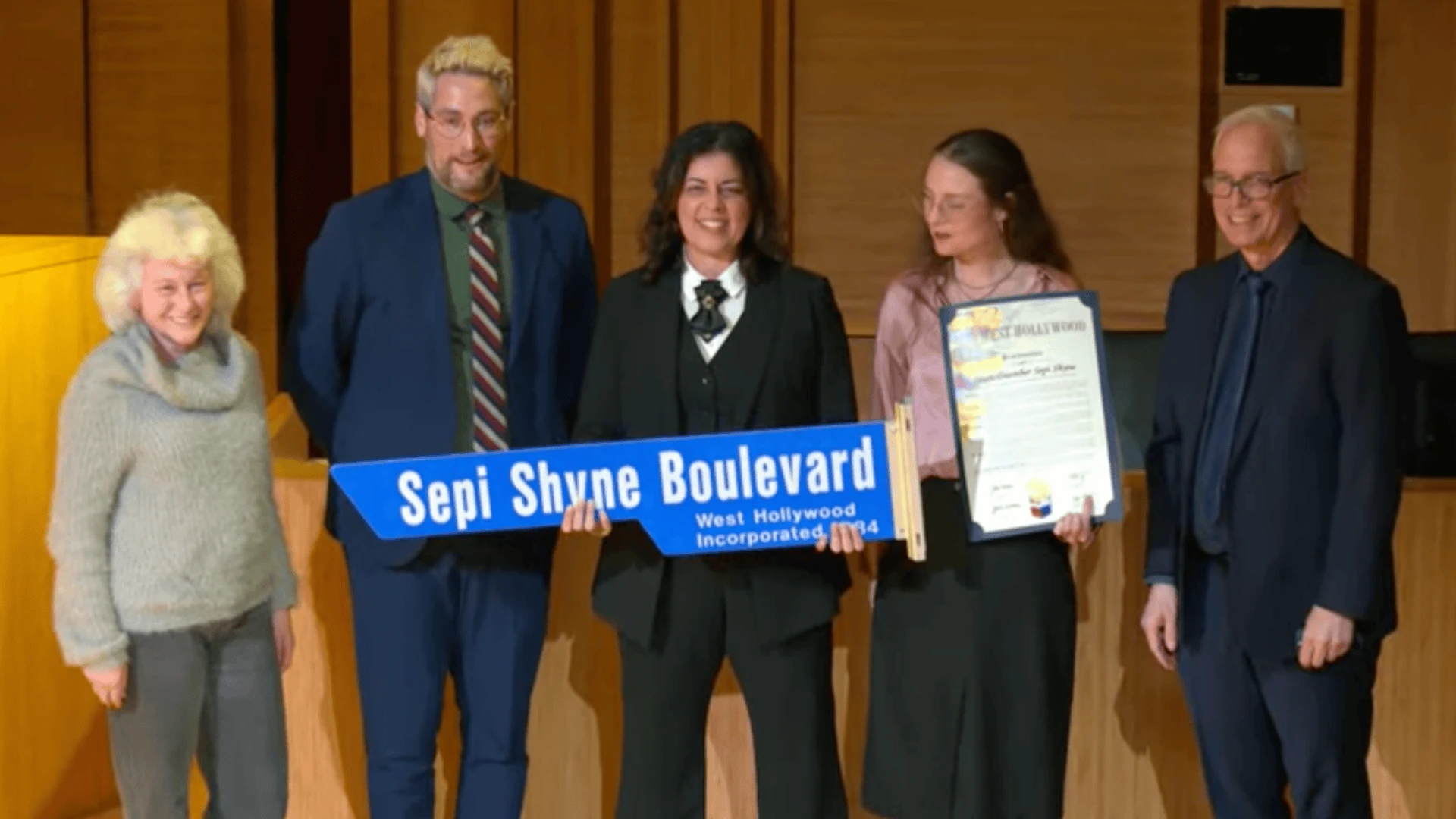
Councilmember Sepi Shyne spent her last night on the dais showered in praise from her colleagues and appointees, who reflected on her triumphs and lamented her challenges over the past four years serving on West Hollywood City Council.
Riding a wave of popular support for progressive politics in 2020, Shyne became WeHo’s first councilwoman of color when she was elected alongside Mayor John M. Erickson; the two unseated Councilmembers John Duran and John Heilman after decades in office. She later became the first Iranian female mayor in the United States and the first out LGBTQ+ Iranian mayor in the world.
She focused on issues concerning gender, race, diversity and equity throughout her term.
But while Shyne and the council majority were able to achieve many of their progressive policy goals, such as increasing the city’s minimum wage to the highest level in the country, her term was marred by a chilly relationship with segments of the community and the press, whom she accused of racism, sexism and misogyny.
Nevertheless, Shyne declared her mission accomplished on Monday night, recalling how she embraced the mantra “Sí, se puede” (“Yes we can”) to get her through the tough times.
“When I ran, I had very clear visions, completely clear, very transparent, very Elizabeth Warren,” Shyne said. “And I fulfilled every single promise.”
Shyne noted that she advanced over 60 initiatives in her first two years, including creating WeHo Pride, launching the Women’s Freedom Festival and establishing the Social Justice Advisory Board. She ran through a list of other accomplishments, such as creating the WeHo Care Team for behavioral health crises and implementing the nation’s first multi-stall gender-neutral restroom ordinance. She also revamped the Rainbow Crosswalks and pushed for the replacement of the familiar Rainbow Pride flag with the Pride Progress flag.
Shyne had a major impact on public safety in WeHo, with mixed results. She advocated for trauma-informed training for deputies and the distribution of drink spiking test strips. As one of the Sheriff’s Department’s most outspoken detractors, she was instrumental in the controversial move to cut deputies in favor of unarmed patrols by security ambassadors.
She was often concerned with taking public stances on national and international issues like the overturning of Roe v. Wade and the Woman, Life, Freedom Revolution in Iran, which she recapped during City Council meetings as the movement unfolded.
Troubles mounted during the latter half of her term as Shyne assumed the role of mayor while running a campaign for Congress, a juggling act that faltered under intense political pressure. She also dealt with the dissolution of her marriage, a recall effort, conflicts with her own commissioners and advisory board members, a stalking incident and a lawsuit against the city.
Shyne’s campaign for Congress ended dismally in March, with the councilmember receiving a mere 234 votes in West Hollywood.
Shyne decided this past summer she would not run for re-election, instead throwing her support behind Danny Hang, who will take her place on City Council.
“The choice to run is something that I would do over and over again,” she said. “And the choice to pass the torch is something I’m proud of.”