WEHOville / WEHOonline · West Hollywood · 2021–2024
I put West Hollywood under the microscope.
I brought reporting, editorial leadership and art direction together at WEHOville and WEHOonline—questioning government, documenting queer life and giving a fiercely local publication a distinctive voice.
- Publication
- WEHOville / WEHOonline
- My role
- WEHOonline co-founder / Managing editor / Reporter / Art director
- Editorial scope
- Civic reporting · Investigations · Interviews · Photography · Editorial design · Voter & Pride guides · Branding · Digital production · AI workflows
I helped write the publication’s next chapter
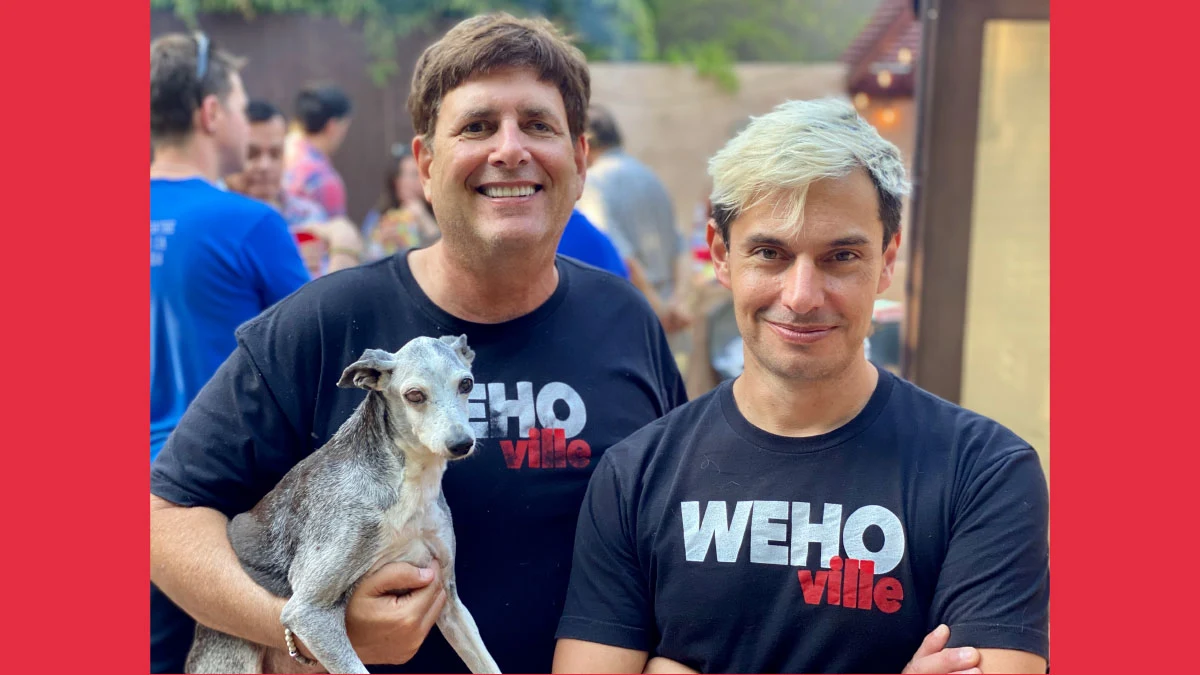
I joined WEHOville in April 2021, as West Hollywood was finding its way through the pandemic and the upheavals that followed. Local journalism needed to keep pace with a city debating its future: public safety, housing, transportation, business survival and the meaning of its own progressive identity. I brought newsroom experience, a designer’s eye and a willingness to ask uncomfortable questions.
Working with publisher Larry Block, I helped establish the publication’s next chapter as WEHOonline. During the 2023 rebrand, I shaped its editorial voice and visual presentation while keeping daily reporting and production moving. The public announcement named me managing director; my responsibilities also encompassed managing editor, reporter and art director.
That meant moving from an interview to a headline, from a graphic to a publishing decision, often within the same day. I coordinated contributors, edited copy, developed stories and assembled the words and images into a publication with a recognizable point of view.
I made City Hall harder to ignore
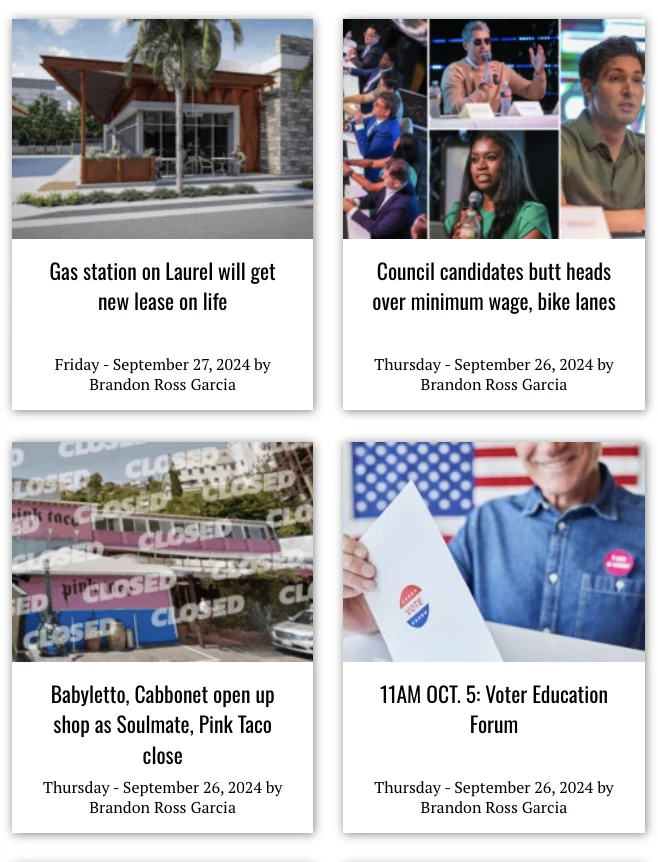
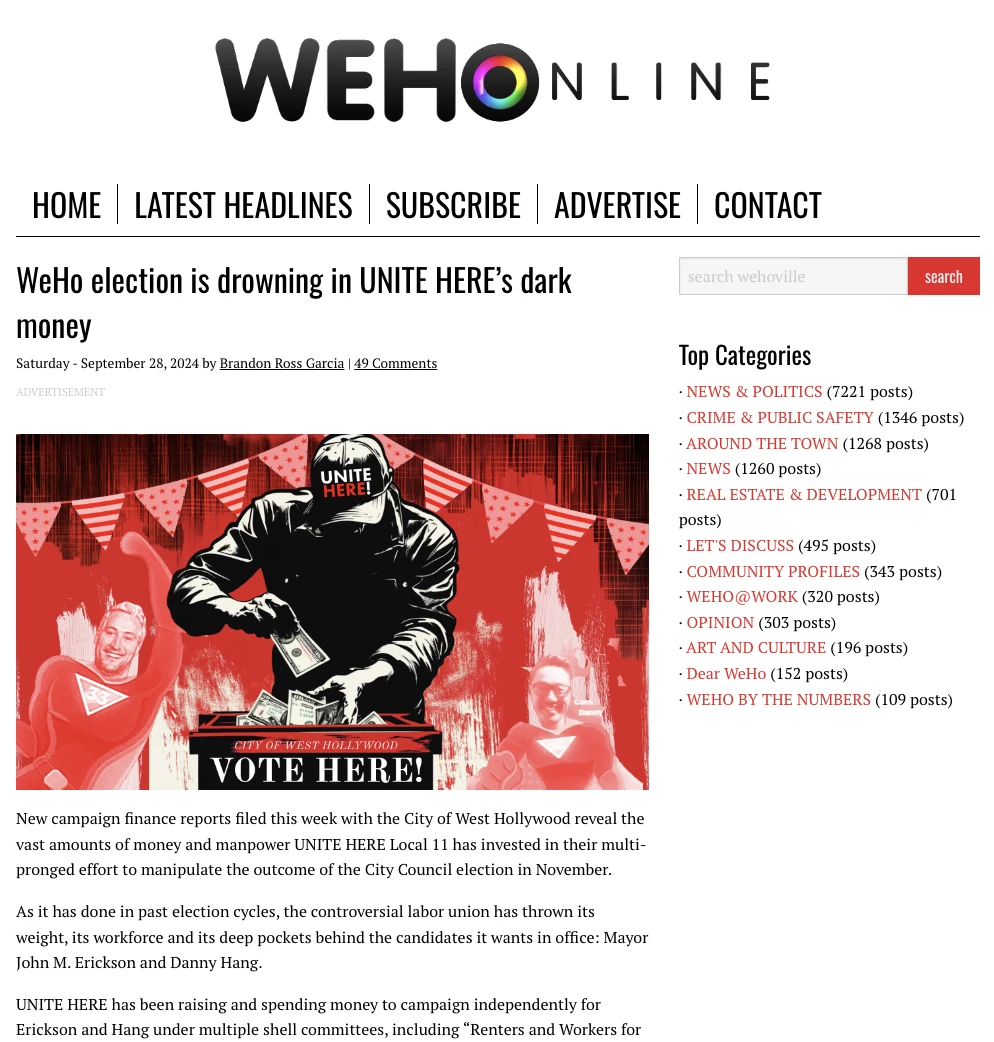
Government transparency sat at the center of my work. I covered the decisions behind the city’s public image: how money moved through elections, how policy affected residents and businesses, and how accessible the machinery of government really was. A small city could generate enormous stories if someone stayed with the details.
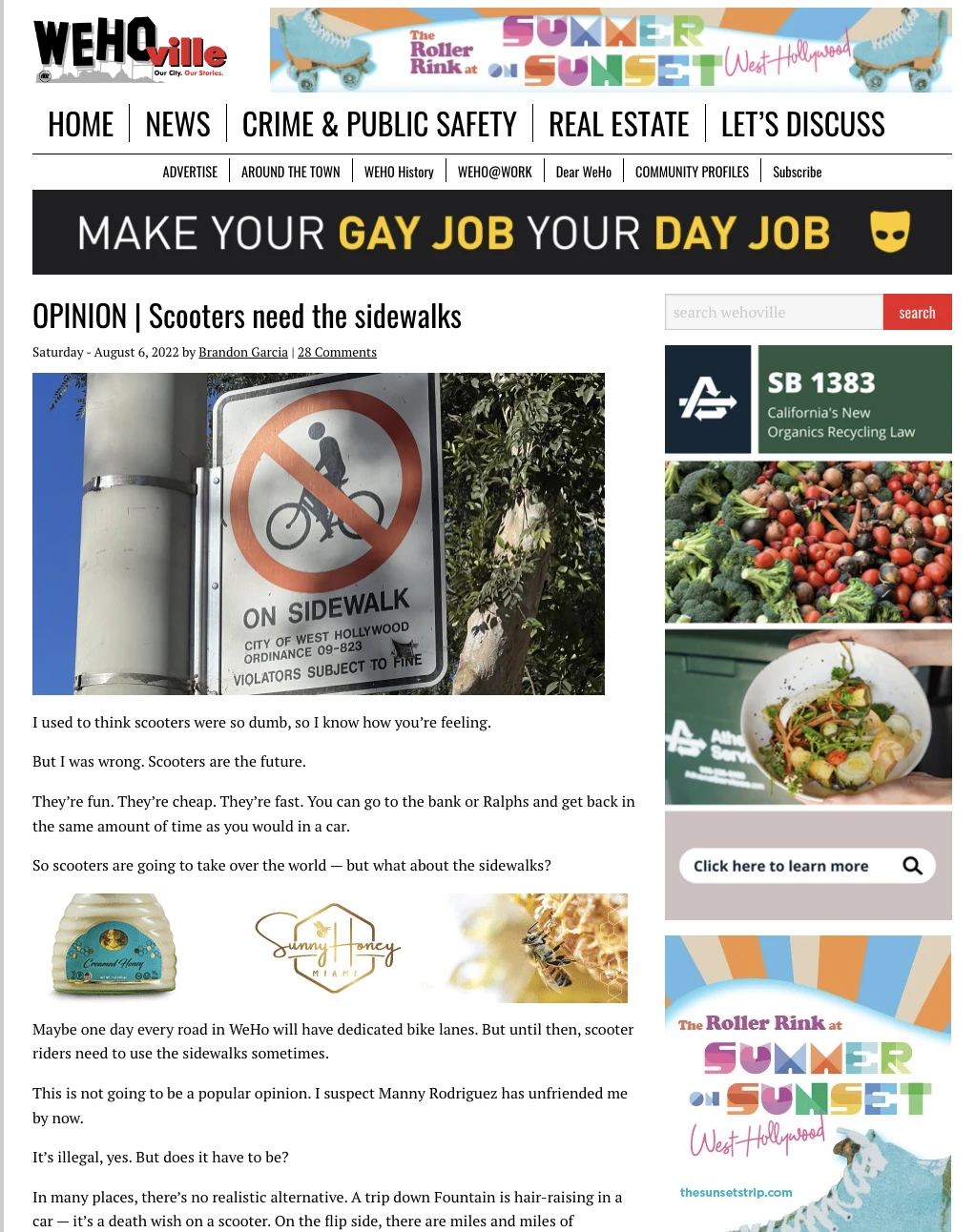
My reporting and commentary connected those details to everyday consequences. Election-money coverage examined the influence surrounding local races. Transportation stories asked what changing streets and sidewalks meant for the people using them. My commentary on the city’s budget meetings challenged the barriers that kept residents from participating in decisions made in their name.
I also helped lead a publication that carried City Hall whistleblower coverage and published the city’s response. I worked with Larry and our contributors to bring those concerns and responses into the public conversation. Our pages became a place where concerns about government could be aired, questioned and answered in public.
I found the people inside the political story
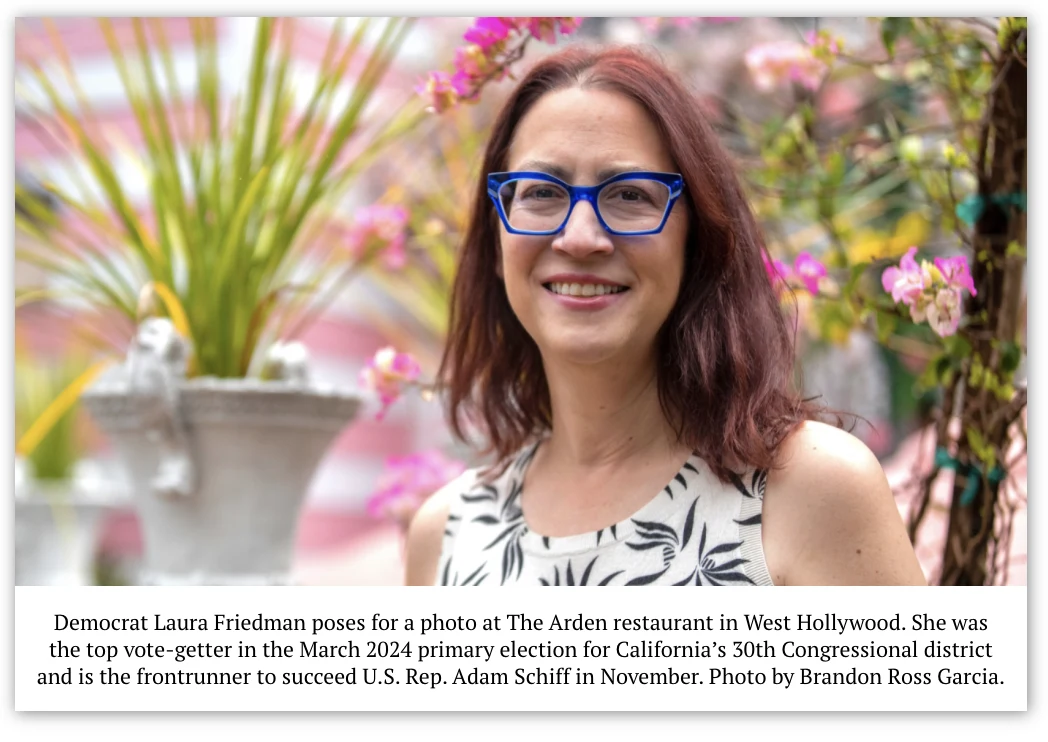
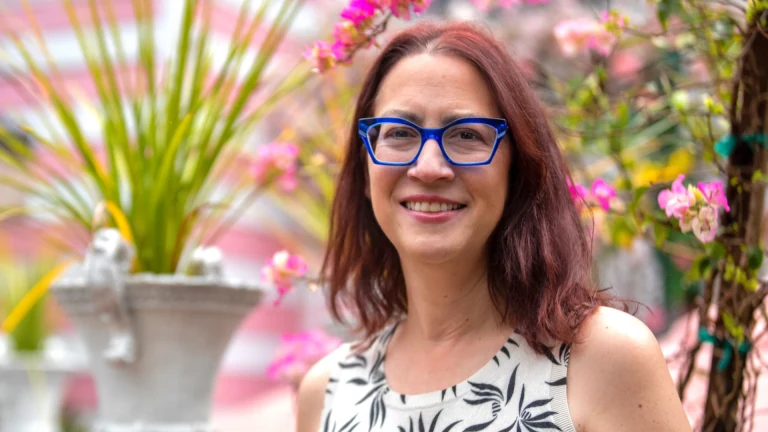
I wanted readers to hear people explain themselves. Larry and I sat down with Los Angeles County Sheriff Alex Villanueva for an extended interview with no questions off limits. I interviewed and photographed Laura Friedman during her 2024 congressional campaign, asking about her record, housing, transportation and the choices facing voters.
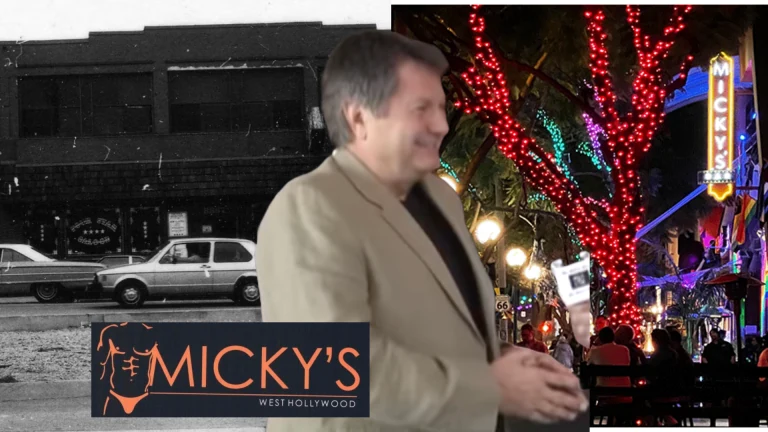
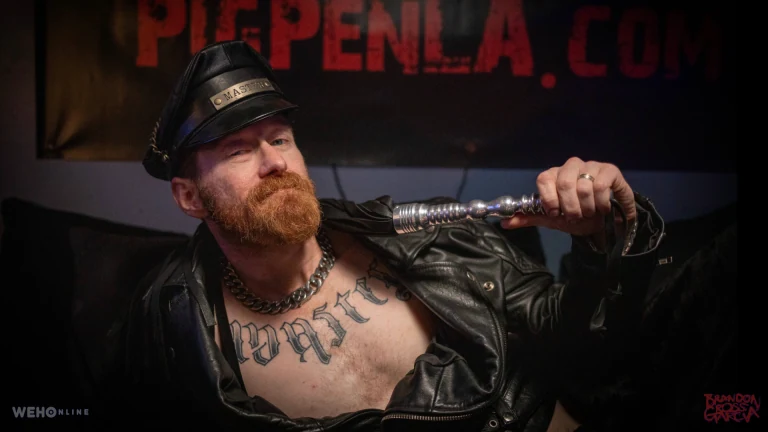
The same curiosity took me into the city’s businesses and queer cultural history. My interview with Micky’s owner Michael Niemeyer explored the fight to keep gay spaces alive, the memory of police harassment and the future of an institution. A feature on The Pig Pen looked beyond an unmarked gate to the person rebuilding a space for an often misunderstood community.
I moved between political interviews, neighborhood stories, photography and community events. The city was more than its council chamber. Its identity lived in the people keeping businesses open, making art, preserving history and insisting on a place for themselves.
I took digital journalism into readers’ hands
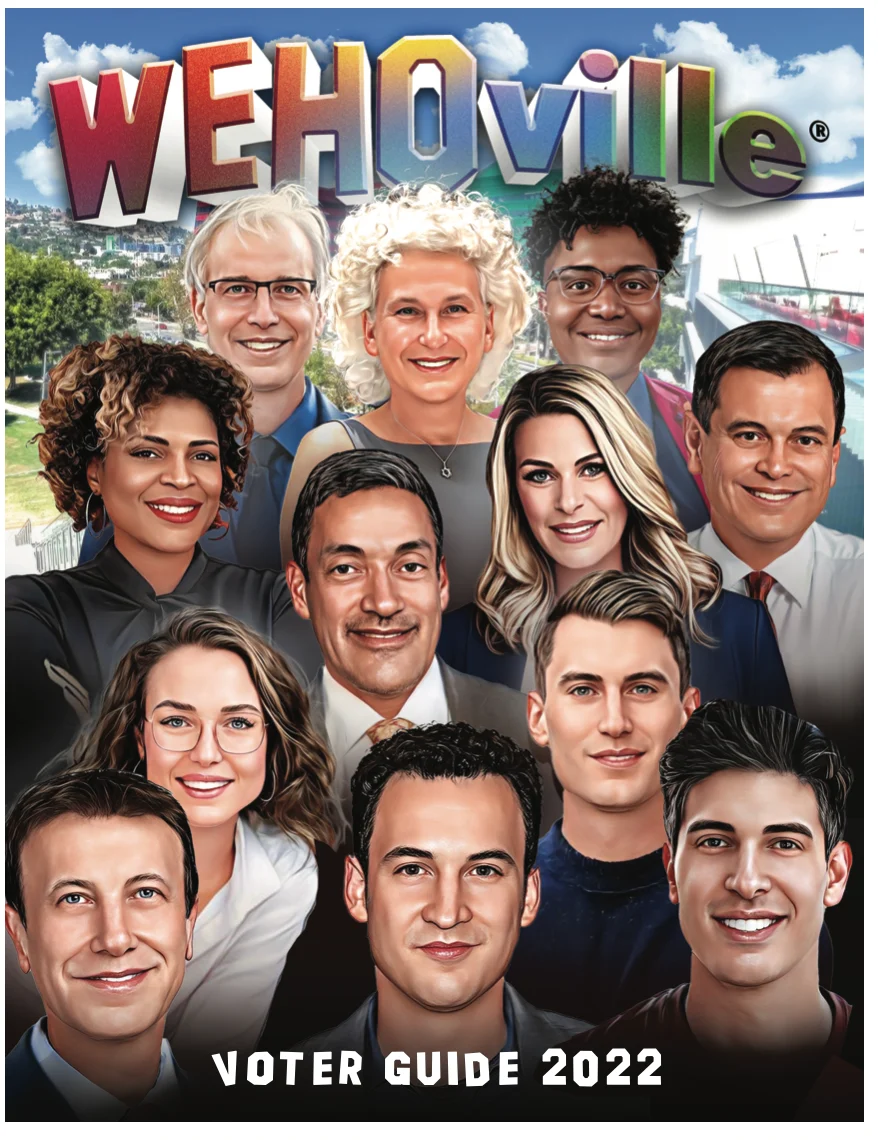
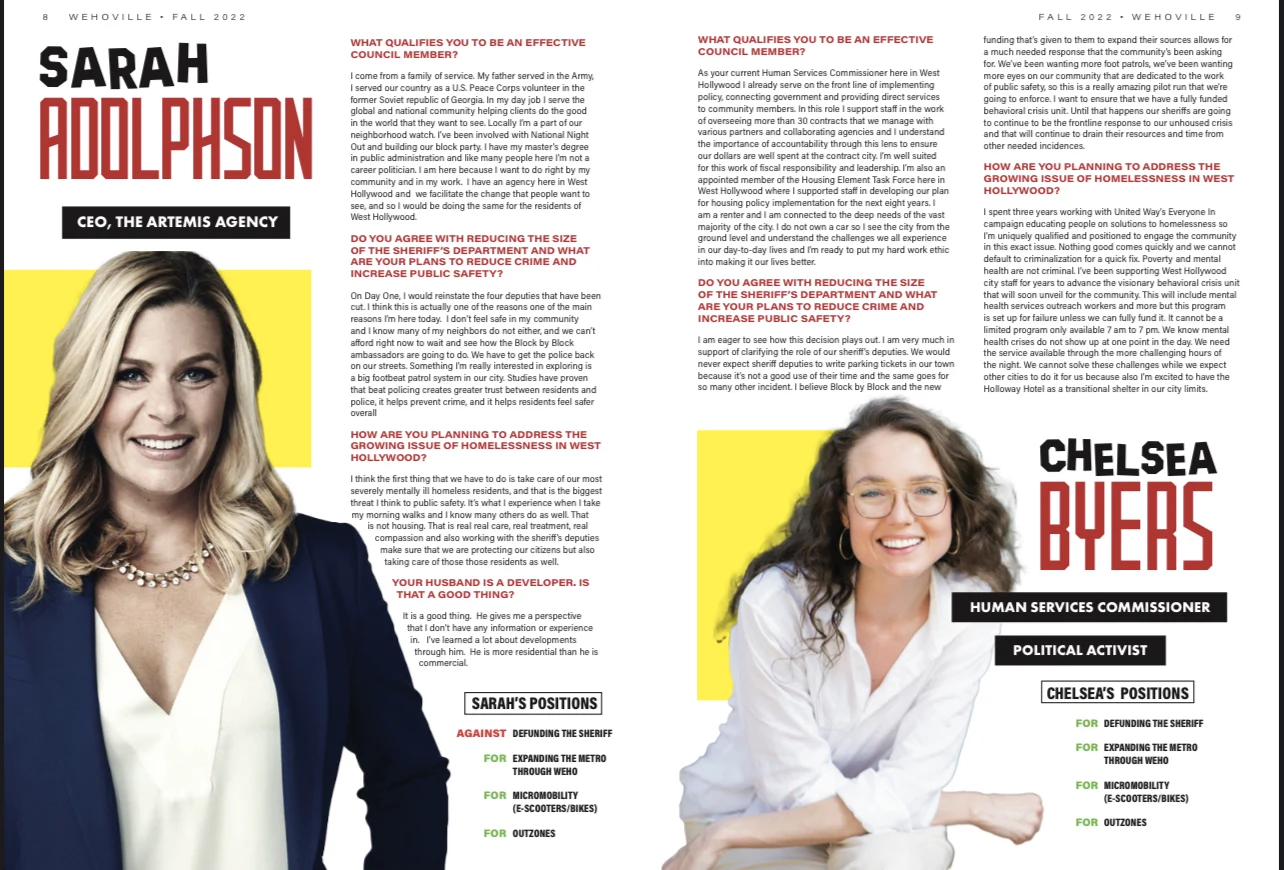
The 2022 WEHOville Voter Guide brought my reporting, writing and magazine-design experience together. I designed and wrote for a 32-page glossy publication, using a bold visual approach inspired by West Hollywood’s Pacific Design Center. Candidate portraits, typography and carefully structured pages gave a complicated election a format readers could actually navigate.
The publisher announced a 15,000-copy production run, including direct mailing to more than 12,000 households. Every West Hollywood City Council candidate received a free profile page, and the guide also covered the county sheriff and supervisor races. It carried the publication’s civic identity off the screen and into homes and local businesses.
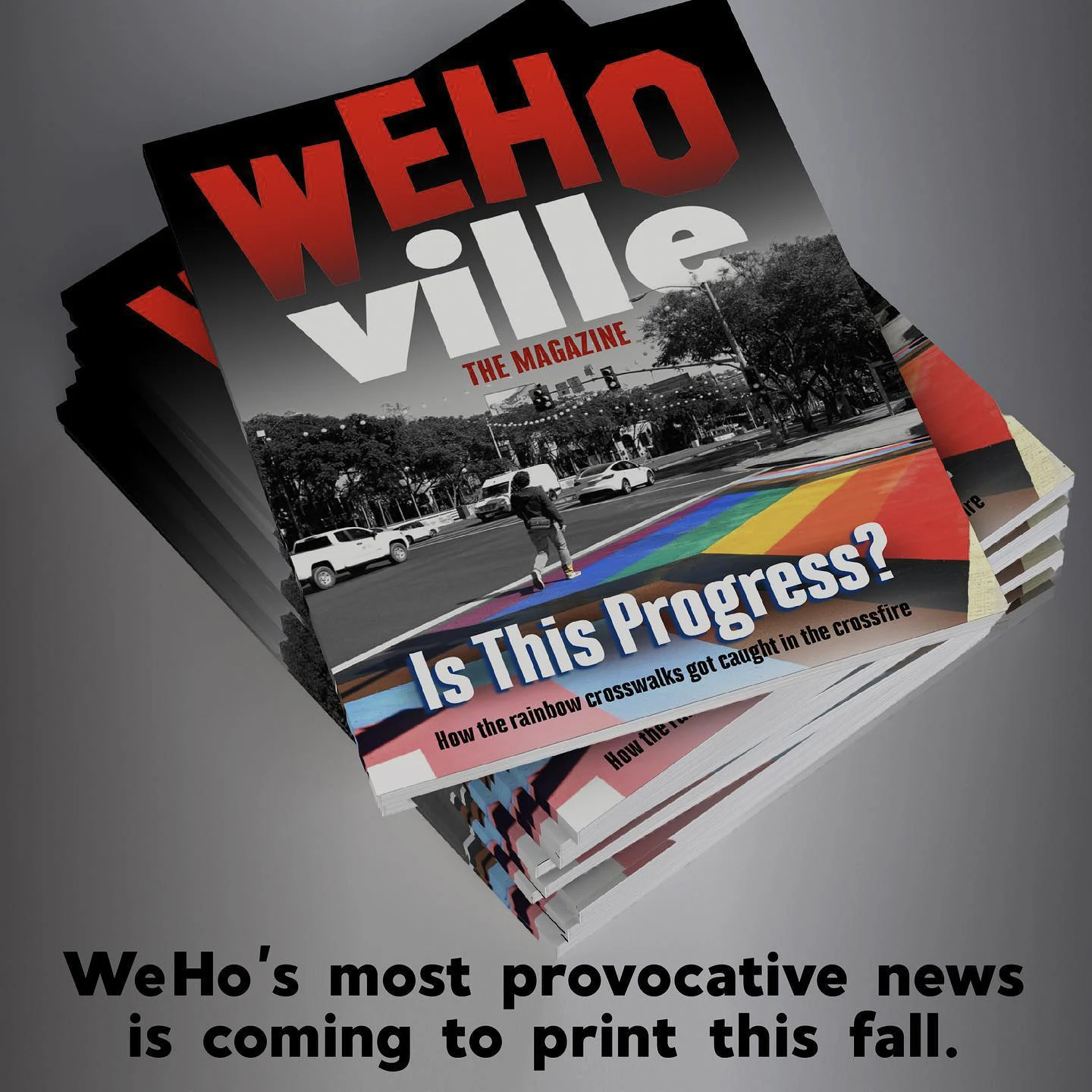
I also brought design and writing to the WeHo Pride Guide, joining a wider team celebrating the city’s culture and businesses. The 2024 edition was a 36-page magazine with a planned 10,000-copy distribution. These publications connected ambitious editorial presentation with the practical work of serving readers and supporting a local media business.
I multiplied what a lean newsroom could do
As generative tools became available, I began working them into my editorial process. ChatGPT and later Grok helped me develop drafts, research questions, organize information and work through complex issues. I used them to support fact-checking and to expand the range of subjects I could tackle, pairing that assistance with reporting, source review and final editing.
AI shortened the distance between a complicated source document and a story readers could use. It also expanded the creative side of the newsroom: visual concepts, illustration and new ways to explain a subject. I could spend less time wrestling with the mechanics of production and more time shaping the coverage.
For a managing editor who was also reporting and directing the art, that change was transformative. It widened the scope of what I could provide readers and helped me sustain a broader mix of civic coverage, interviews, community stories and visual journalism with a lean operation.
I gave serious journalism a personality of its own
A local publication needs more than a stream of updates. I gave the work an identifiable voice through headlines, photography, illustrations, visual explainers and a willingness to be funny. The animated Cityline Flex graphic shows that impulse in miniature: take an ordinary civic subject and make it something people will actually notice.
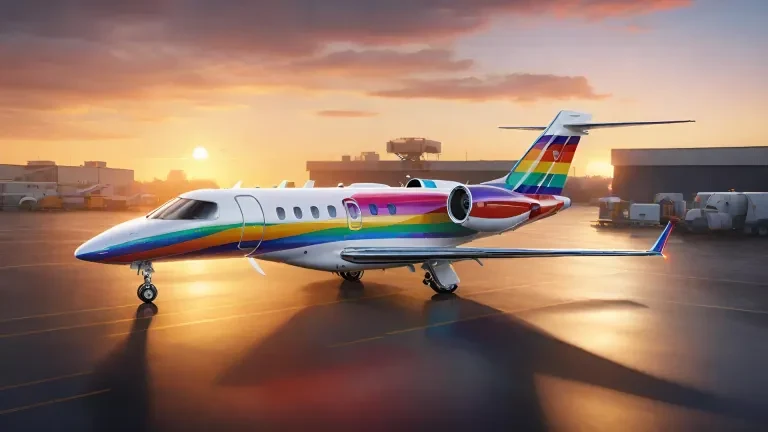
My April Fools piece about “Rainbow Force One,” a fictional municipal private jet, turned city spending and political spectacle into satire. Elsewhere, an extended interview or a carefully designed voter profile called for a different register. I could shift the tone while keeping the subject clear and the publication recognizable.
Across 2021–2024, I brought editorial leadership and creative production into the same practice. I helped carry WEHOville into WEHOonline, built print publications, questioned government and documented the people who gave the city its character. I made local news more distinctive, more accessible and harder to scroll past.
 Politics / Interview
 Business / Community
 April Fools / Satire
Publication records & further reading
- The WEHOonline transition and managing-director announcement, October 2023 ↗
- The 2022 voter guide: format, production run and candidate pages ↗
- The 2024 Pride Guide: publication scope and team ↗
- The city’s published response to whistleblower claims, March 2024 ↗
- Larry Block’s account of our Villanueva interview and newsroom work ↗
Local journalism matters when someone is willing to look closer—and make the story worth reading.
Explore my articles & journalism ↗Return to the portfolio